PROJECT LEANO
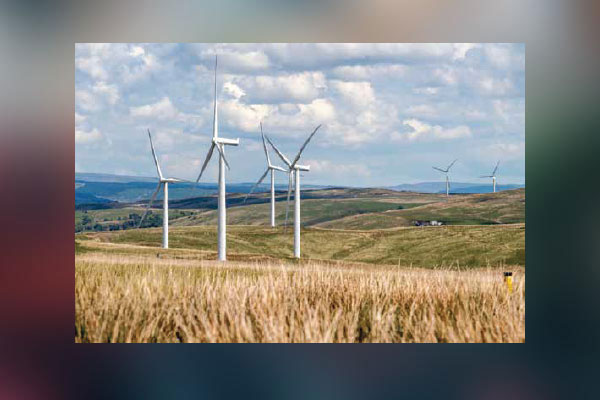
Project LEANO is a green hydrogen hub under development on the Eastern Limb of the Bushveld PGM Belt in Steelpoort, Limpopo Province, South Africa. The project is sponsored by Asceng (Pty) Ltd in partnership with the Fetakgomo Special Economic Zone Company and DMT Energy.
Project Drivers
- Decarbonisation and Just Energy Transition
- RSA Climate Change Act 22 of 2024
- RSA Industrial Development Strategy 2026
- Employment Creation & Skills Development Energy Supply Security
- International Carbon Tariff Compliance
- Energy Supply Security
Value Proposition
- High Purity Hydrogen (≥99.998%)
- Industrial Grade Oxygen Production
- Carbon-Free Haulage and Freight
- Hybrid Vehicle Transportation Fuel
- Carbon-Free Electrification
- Target Hydrogen Supply Price: USD 2–3/kg

TUTUKA POWER PLANT ESP HFPS INSTALLATION 2020 TO CURRENT
In February 2020, Asceng-Led JV was appointed by Eskom for the Engineering, Manufacturing, Supply, Site Delivery, Installation and Commissioning of 60 High Frequency Power Supply units (HFPS), including the upgrade of the Precipitator Plant Management System (PPMS) at Tutuka Power Station. This is a multi-years contract covers three generation units.
Eskom has been put under Notice by the Department of Environmental Affairs (DEA) to conform to the Minimum Emission Standards of 100mg/Nm3 particulate level by 2015 and 50mg/Nm3 particulate level by 2020 as per the Air Quality Act, 2004 [Act 39/2004]. Currently Tutuka Power Station is not able to operate sustainably within its licence limits.
This will be achieved by amongst other technologies, installing HFPS units at Tutuka Power Station to improve the performance of the Electrostatic Precipitator Plant, in an integrated strategy to reduce particulate emissions to within the operating licence limits.

SALDANHA PORT BULK POWER UPGRADE 2019 - 2021
The new bulk electrical supply infrastructure was an integral part of the Tippler 3 programme. The purpose of which was to increase the capacity of the existing power supply from 20MVA to 40MVA (at n-1 level of contingency) to meet current and future demands at the Port of Saldanha. The project involved the design and construction of four substations from 132kV to 11kV. The new double tippler infrastructure supply via 11kV/420 dry-type transformers.

ROCK ENGINEERING SERVICES â KALAGADI MINE (2018)
In May 2018, ASCENG was awarded a project for the Provision of Rock Engineering Services to the underground section at Kalagadi Manganese Mine in the Northern Cape Province. The scope of work included the following, among others:
In addition to this contract at the expiration, ASCENG was subsequently retained to do a review on slope stability factors for consideration in the design and implementation of a possible future Open Pit section at the Mine.

MAINTENANCE MANAGEMENT FRAMEWORK â KALAGADI MINE (2019 )
In May 2019, ASCENG was awarded a contract to develop and compile a Maintenance Management Frame work (MMF) for three areas of Kalagadi Manganese Mine, namely: Ore Processing (Ore Preparation, Sinter Plant), Surface Infrastructure, Rail Yard and Roads. The project entailed the following activities:

MASORINI IRON & STEEL PROJECT (2015 )

ASCENG was part of the multidisciplinary integrated Engineering Procurement and Construction Management(EPCM) team led by a global consultancy. The FEL1 and FEL2 study was conducted on behalf of the Industrial Development Corporation (IDC). The project was scoped as a 2.5Mtpa steel plant planned to be constructed in South Africa. As it was originally conceived, the finished steel products of the project principally consisted of 1.15Mpta long products and 1.35 Mtpa of flat products for SA and the broader Sub-Saharan Africa region. The team conducted a study that selected a manufacturing route which included pelletizing of magnetite, ironmaking with a rotary hearth furnace technology, electric arc furnace steelmaking, thin slab casting and rolling, billet casting and hot rolling. ASCENG engineers and practitioners were part of the following workstreams:
ASCENG also played a role in the Technology Study that was conducted in Australia, which was one of the four offices from which the study was conducted. The other offices were in South Africa, United Kingdom and Canada. The project capex was estimated at $9bn.
PROJECT MANAGING THE INSTALLATION OF 15 000 SOLAR WATER HEATERS ( SWH) IN LOW INCOME RESIDENTIAL AREAS ON BEHALF OF ESKOM, 2010 2011
This was a single mandate, one- company project, which was granted as an implementation stage (FEL4) project. It was issued by, and executed on behalf of Eskom in the Garankuwa district northwest of Pretoria, Tshwane. This was a national project aimed at peak power reduction and energy efficiency with an average reduction of approximately 2.1kWh/day per system. ASCENG was responsible for:
Ensuring that the close-out processes and documentation is within the required quality guidelines.

DEVELOPMENT OF THE INVESTMENT POLICY MANAGEMENT FRAMEWORK FOR THE NEWLY FORMED TECHNOLOGY INNOVATION AGENCY, 2009-2010
When the Technology Innovation Agency (TIA) was formed with the merger of seven Departments of Science and Technology entities previously tasked with supporting and promoting innovation in the country, namely the Innovation Fund, Tshumisano Trust, Cape Biotech Trust, PlantBio Trust, LIFElab, BioPAD Trust, and the Advanced Manufacturing Technology Strategy (AMTS), was jointly commissioned with designing the new organisation's investment policy management

SCAW METALS RE- ALIGNMENT STUDY, 2012
Scaw Metals is a diversified business that serves the steel manufacturing and mining sectors in South Africa with a wide range of specialized steel products. After Anglo American's announcement of its intent to divest from Scaw Metals, the IOC decided to invest with the aim of integrating Scaw into its steel strategy and to support local beneficiation through competitively priced steel. As part of its investment activities, the IOC launched a scoping study to develop a plan for enhancing Scaw's Rolled Products and Cast Products facilities to reduce its costs and to align its operations with the IOC's steel strategies. ASCENG and its partner company worked very closely with the Scaw team to develop a capex plan and an opex model to achieve the scoping study objective as set out by the IOC and assisted the IOC in developing a blue-print for the attraction and selection of a Strategic Equity Partner for Scaw Metals. The following activities were undertaken by the team:
This was a compressed study on a brownfield Site.
CAPE TOWN AIRPORT FIBRE NETWORK UPGRADE: ATNS - DESIGN AND SPECIFICATION 12 KM OF OPTICAL FIBRE TRANSPORT NETWORK 2017 â 2018
The Air Traffic and Navigation Service Company Limited (ATNS) is a State-Owned Company (SOC), established in 1993 in terms of the ATNS Company Act (Act 45 of 1993) to provide air traffic management solutions and associated services on behalf of the State.
The 12km OTN was a sleeve and manhole design with terminations at distributed field equipment stations and at the main tower building. The network supported Communication, Navigation and Surveillance Systems excluding the main airport building.

BOMBELA CJV U 36 SETTLEMENT REMEDIAL WORK(2016-2017 )8
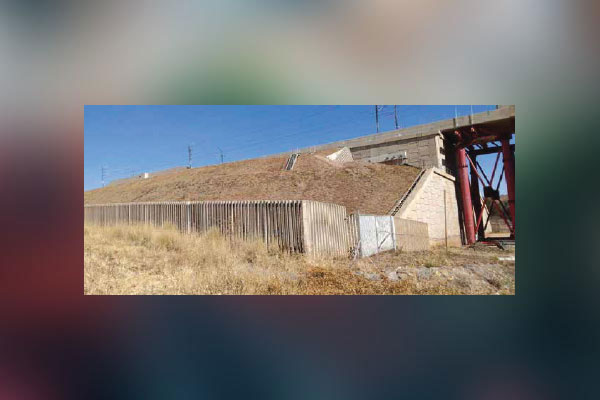
Bombela appointed ASCENG to conduct a HAZOP study for remedial work on the U36 structure (near UNISA) on the Gautrain line between Johannesburg and Pretoria.
This section has experienced gradual settlement of the embankment and in-situ soil over a period of time since operations began. The proposed remedial work involved the jacking and lifting of the U-shape in stages and filling the voids with high strength grout. ASCENG together with its project partner, provided the advisory services.
BUSHVELD TITANOMIAGNETITE PROJECT DESCRIPTION-(2015-2016)
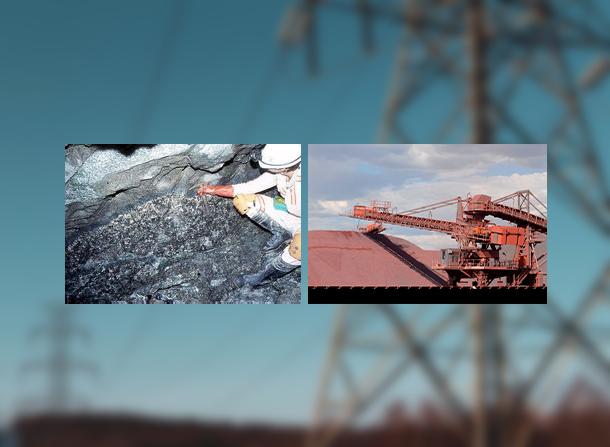
The objective of the Bushveld Titano-Magnetite concept study was to evaluate the economic viability of a steel plant operating with this ore type and to develop a road map aimed at maximizing the overall economics through the recovery of a titanium by-product (and potentially other by-products). This study was necessitated by the fact that access to traditional, high-grade iron ore resources in South Africa was becoming increasingly difficult and as a result attention was shifting to alternative resources such as the Titano- magnetite deposits located in the Bushveld Complex.
The resource was extensive (more than 20 billion tonnes) but under-utilised because of the relatively low iron content. To unlock value from the ore it was therefore necessary to also recover other metals contained in the ore such as titanium, some vanadium, and potentially some phosphate.
MANGANESE 16 MTPA RAIL PHASE EXPANSION ( PHASE 1 AND PHASE 2 ) PROJECTS, 2014-2019
ASCENG was part of the EPCM team providing services for FEL3 and 4 stages of the Manganese 16Mtpa Rail Expansion Project for Transnet. The project is designed to increase the capacity of the rail system to 16Mtpa for manganese export out of the Port of Ngqura from the Manganese belt in the Northern Cape, approximately 1100km route length.
The project scope included; upgrading of the existing compilation yards, doubling of the track on the mainline, new and extension of existing passing loops, power supply, upgrading of traction substation and signalling equipment.

EKURHULENI 10MWP SOLAR PV PLANT
Ekurhuleni Metropolitan Municipality (EMM) is AAA rated situated north-east of Johannesburg. In or about 2016, the Metro embarked on an IPP programme to generate approximately 500MW on behalf of the Metro from Solar, Waste and Gas resources. EMM sought competitive proposals from potential power producers to enter into partnership through several Power Purchase Agreements (PPA) for the period of atleast 20 years at rates equal to or less than Eskomâs Megaflex tariff. EMM contemplated multiple PPAs awarded under this RFP.
In terms of this RFP, EMM was only interested in renewable energy generation projects and the City will be an off-taker of the power generated. ASCENG was awarded based on Solar PV technology, amongst a range of other technologies that also included Gas, as well as Waste-to-Gas. The generation plant is to be located within the boundaries of EMM and preferably close to EMMâs MV network (11kV and 6.6kV).
ASCENG will finance, design, procure, construct, commission, operate and maintain the proposed power plant. The type of equipment ASCENG proposed for this project has a proven track record and success in similar projects in other countries or locally. Further, ASCENG continues to assess the possibility of consolidating efforts with other successful applicants to develop a larger Solar Farm (50 to 100MWp)), within the conditions and prescripts of EMM.

DESIGN AND IMPLEMENTATION OF CONTROL AND INSTRUMENTATION SYSTEMS FOR ESKOMâS NEW COAL-FIRED POWER GENERATION PLANTS, 2014 (NOV)â2015 (FEB)
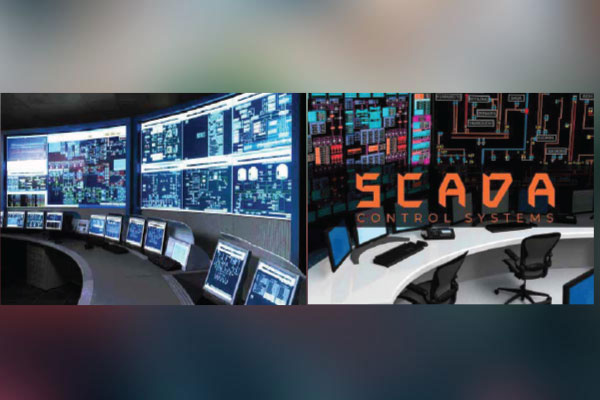
This project was executed in partnership with a large international EPC contractor from concept to commissioning. ASCENG engineers and technicians were part of a global team that developed the Early Works Engineering package for Kusile Power station.
KWAZULU-NATAL (KZN) LEGISLATURE AND GOVERNMENT PRECINCT, 2009
The company was a key member of the Transaction Advisory Consortium for the KZN provincial government Treasury Department, advising on a R4 billion public â private-partnership (PPP) project to build a Legislature and Government Precinct.

DEVELOPMENT OF AN ENERGY SECURITY AND CARBON MITIGATION STRATEGY FOR THE TRANSNET GROUP, 2013
South Africa's energy security is vulnerable.This is expected to intensify over the short to medium term and based on the Integrated Resource Plan (IRP 2010) will persist into the medium to long term. South Africa's electricity generation capacity is unlikely to keep pace with industry demand.
Transnet's energy requirements to meet the MOS targets will increase between 44% and 65%, which is higher than the planned 26% increase in South Africa's generation capacity.
This poses a significant strategic risk to Transnet. This was a two months study to formulate a roadmap to de-risk the Transnet Group MDS target from the national energy supply shortages. ASCENG was responsible for identifying locomotive and traction technologies and alternative energy supply options to mitigate against the projected electricity supply and liquid fuel shortages.